
Have you ever wondered that, inside those high-voltage cables, aside from the conductors that carry electrical power, there is a hidden circuit quietly consuming energy, generating heat, and even threatening the safety of the entire power grid? The current generated by this hidden circuit is known as cable loop current. Today, we’ll demystify it, explore exactly what it is, and discuss how to prevent it.
I. What is cable sheath current?
To understand shielded cable circulation, we must first understand the structure of high-voltage cables. Take a high-voltage single-core cable as an example: its main components are the conductor core, the insulation layer, and the metal shield. The conductor core, located at the center, is responsible for transmitting electrical energy; the insulation layer surrounds it to ensure electrical isolation; and the outermost layer is the metal shield (aluminum or copper sheath), which provides protection and shielding.
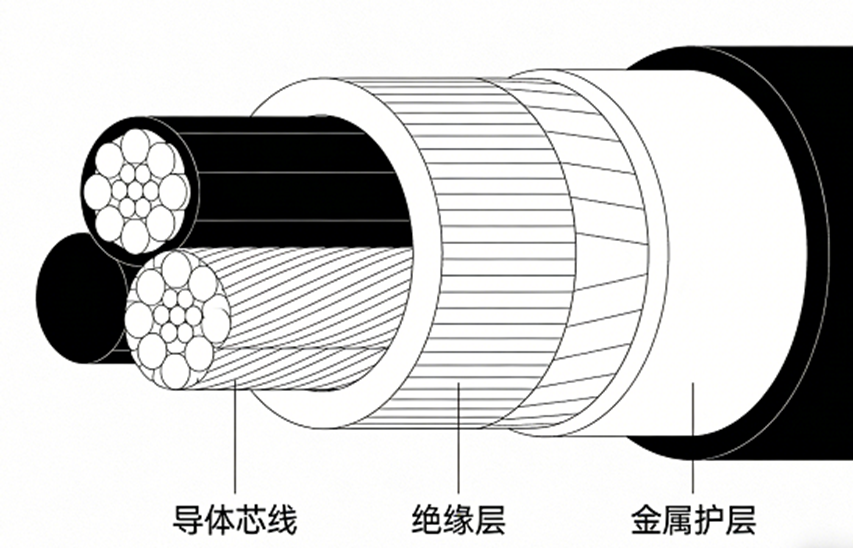
When an alternating current flows through the cable conductor, an alternating magnetic field is generated around it due to the principle of electromagnetic induction. This magnetic field penetrates the metal shield, inducing an electromotive force within the shield. If both ends of the metal shield are grounded, or if it is grounded at multiple points, a closed circuit is formed. The induced electromotive force drives the flow of electrons, thereby generating a current—this is known as shield loop current.
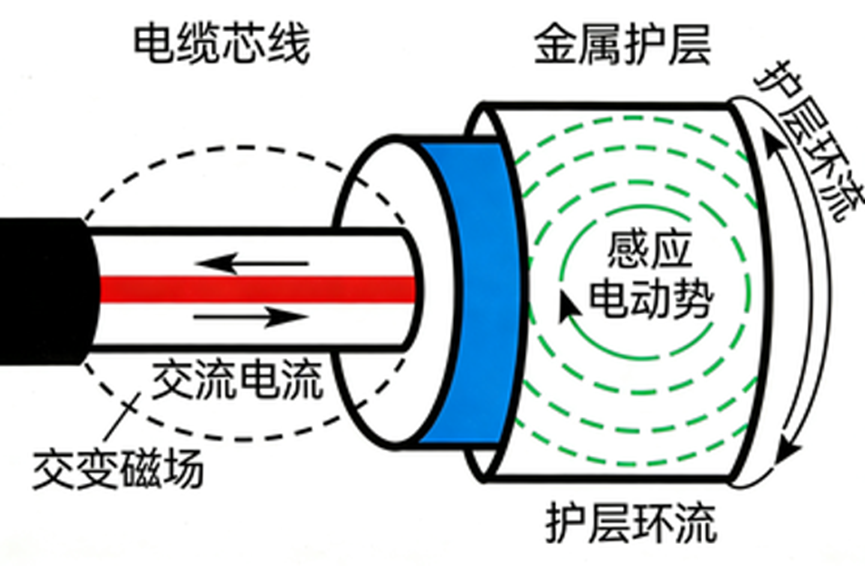
This works much like a transformer; in other words, the core wire acts as the primary coil of the transformer, while the metal shield acts as the secondary coil. When current flows through the primary coil, an induced current is generated in the secondary coil.
II. How is the mantle circulation generated?
The formation of a sheath current is primarily related to the grounding method:
1. Grounded at both ends
When the metal shield of a cable is grounded at both ends, under normal operating conditions, the induced electromotive force caused by electromagnetic induction creates a potential difference across the shield, resulting in circulating currents. The greater the current flowing through the cable, the stronger the magnetic field generated, and the more pronounced the circulating currents become.
2. Multiple-point grounding
Even in cables with a single-point grounding design, loop currents can still occur if the sheath forms an additional grounding path due to poor grounding or accidental contact with other metal objects.
III. Wasted Heat: The Invisible "Electricity Thief"
The presence of sheath current results in additional power losses, and this wasted heat significantly increases operating costs. More seriously, it triggers a series of chain reactions: for instance, sheath current causes the metal sheath to heat up, accelerating cable aging and degrading insulation. When insulation performance deteriorates to a certain point, it leads to insulation failure, causing ground faults or even short-circuit incidents that threaten the safe operation of the power grid—it’s nothing short of a “domino effect”!
IV. How to Monitor Circulation in the Mantle?
Given the serious risks posed by sheath currents, how can we detect them in a timely manner? Traditional inspection methods struggle to detect these subtle current fluctuations, which is why specialized monitoring equipment is needed.
The Dinsee Smart DX-DLS100-HLGround Loop Monitoring System is specifically designed to meet this need.

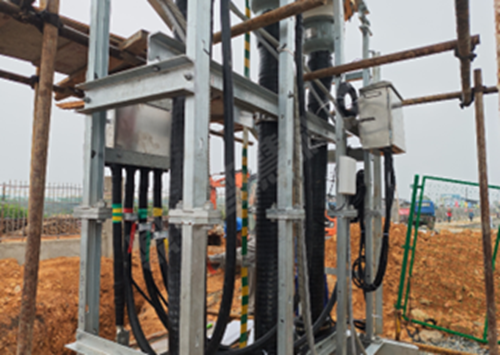
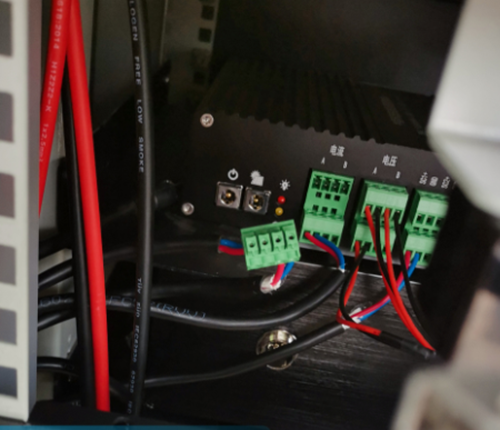
A loop current transformer is installed on the grounding conductor of the cable sheath to measure the magnitude and changes in loop current in real time. The measurement data is transmitted to the backend monitoring center via communication methods such as fiber optics or 4G, where it is analyzed and processed in conjunction with the intelligent monitoring system.
As soon as an abnormal circulation is detected, the system immediately issues an alert, allowing operations and maintenance personnel to pinpoint the location of the fault immediately, intervene swiftly, and nip potential issues in the bud.
V. Highlights of the Monitoring
Flexible power supply: Supports power generation via CT induction and solar panels, with a lithium-ion battery providing backup power, ensuring stable operation even in remote areas without access to the power grid.
High weather resistance: Withstands temperatures up to 85°C and as low as -55°C, and features a waterproof rating of at least IP68, making it ideal for harsh outdoor environments.
Intelligent Protection: Utilizes anti-electromagnetic interference technology to ensure zero false alarms; features built-in self-healing capabilities to reduce maintenance costs; supports scheduled reporting of device status, keeping operations and maintenance personnel fully informed.
Rapid Alerts: Customizable current warning and alarm thresholds; an alert text message is sent immediately upon detection of an anomaly, ensuring a prompt response.
VI. How can the hazards of the boundary layer circulation be prevented?
In addition to monitoring, preventing the hazards of the protective layer circulation at the source is equally important. Here are some effective preventive measures:
1. Optimize the grounding method
During the cable design and installation phases, optimization strategies such as cross-interconnection grounding can be implemented. By altering the location and method of grounding connections, shield loop currents can be effectively reduced.
2. Improve cable selection
Select cable products that are reliable and have good sheath insulation to minimize the likelihood of circulating currents from the source.
3. Regular monitoring and maintenance
Even with an optimized design, it is necessary to regularly monitor changes in the flow within the protective layer to promptly identify and address potential issues.