
In sectors such as power transmission, oil extraction, and wind power generation, critical infrastructure—including transmission towers, substations, and rotating machinery—has a very long service life. Such outdoor facilities and equipment are continuously exposed to complex physical environments, and their mechanical structures inevitably suffer from fatigue damage or electrical performance degradation. Traditional contact-based vibration monitoring or manual inspection methods often face technical bottlenecks—such as high deployment costs, poor real-time performance, and insensitivity to detecting early, subtle fault characteristics—when dealing with large-scale, discontinuously distributed outdoor assets.
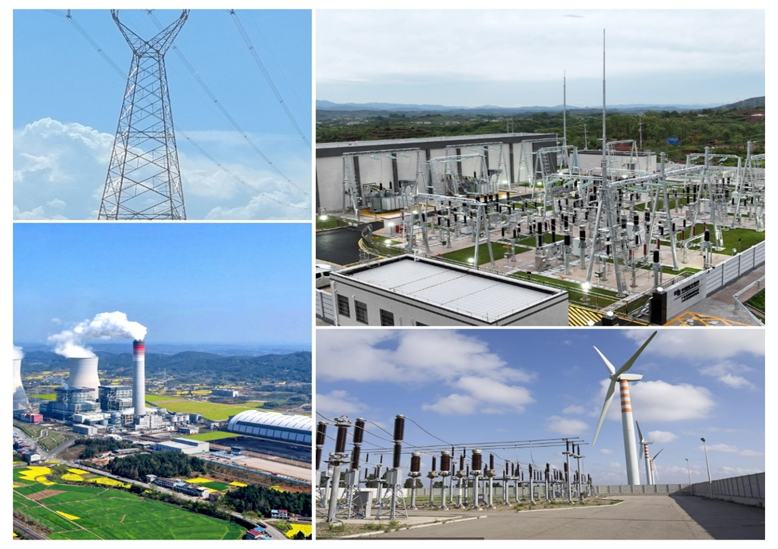
As a non-invasive method of condition monitoring, acoustic monitoring derives its core value from its ability to capture broadband acoustic emission signals generated during equipment operation. However, environmental wind noise and electromagnetic induction noise at industrial sites can easily mask the true fault-related frequencies, making it difficult for conventional acoustic analysis methods to achieve a signal-to-noise ratio that meets engineering requirements.
In response to the urgent need for equipment health monitoring in complex industrial environments, Dingxin Smart Technology has launched an enhanced portable acoustic fingerprint monitoring and fault diagnosis device featuring high-sensitivity detection. Designed to address the challenge of identifying early-stage fault risks in energy infrastructure during long-term operation, the device is applicable to a wide range of industrial scenarios, including power transmission towers, substations, as well as mining, wind power, thermal power, and oil extraction. To ensure the accuracy of fault acoustic fingerprint feature extraction, we perform weighted dimensionality reduction on Mel-frequency cepstral coefficients (MFCCs) and supplement this with a vector-based recognition algorithm to precisely identify and filter out environmental noise.
For example, in the case of non-contact detection of loose bolts on transmission towers, the enhanced portable acoustic monitoring and fault diagnosis device makes full use of active acoustic excitation and digital twin comparison. Last month, as part of a transmission tower monitoring project in Shaanxi Province, the device was used to conduct full-tower inspections on two transmission towers for the first time; the diagnostic results indicated that both towers had potential bolt loosening issues to varying degrees.
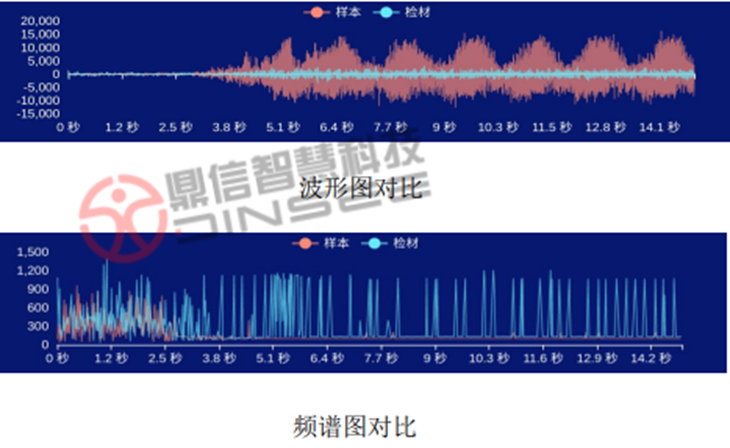
On-site monitoring employs a collaborative operation mode combining “portable acoustic fingerprint monitoring and wireless acoustic transducers.” After completing acoustic fingerprint characterization and digital twin modeling, a full-tower scan and data collection for a single-base tower takes only 25 minutes. By comparing the acoustic signals collected on-site with the reference samples in the digital twin model, the results show that the acoustic signals triggered by loose bolts exhibit distinct discontinuous impact characteristics in the time-domain waveforms and introduce high-frequency modulation components in the frequency-domain spectra, resulting in significant statistical differences compared to the reference samples from bolts in a secure state.

To further prevent false alarms caused by environmental acoustic interference, we also performed secondary spatial imaging and localization using an acoustic camera. The results showed that, at the same time the acoustic fingerprint algorithm triggered an alarm, the acoustic camera reconstructed a clear energy spot at the physical location of the loose bolt. This multi-layered verification mechanism minimizes interference from background noise and ensures the accuracy of on-site tower hazard diagnosis results.

Measurements taken with a torque wrench showed that the tightening torque of this bolt was only 78% of the design value, far below the standard threshold. The loose bolt was tightened on-site. After tightening, the system immediately performed a retest, and the spot visible in the acoustic camera image disappeared, while the acoustic fingerprint curve returned to its baseline state.
In actual engineering deployments, Dingxin Smart Technology’s portable acoustic monitoring and fault diagnosis device has demonstrated its versatility across various industries. From power transmission towers and substations to frontline operations in the oil and coal mining industries, by capturing key acoustic characteristics in real time, the device enables non-contact inspection and early warning for typical faults—such as structural loosening and instability in transmission towers, partial discharge in substation equipment, and wear in rotating machinery—providing reliable, real-time data support for the predictive maintenance of industrial assets.