
What is the most easily overlooked part of a steel tower? It’s not the tower itself, nor the conductors—it’s those bolts the size of a fingernail. Don’t let their unassuming appearance fool you—the main and secondary materials of the tower, as well as the mounting hardware, all rely on these bolts for secure fastening. They are the “pivots” of the entire steel tower’s load-bearing system. If a bolt becomes loose, loses its preload, or even falls out, the local structure may immediately lose stability, leading to tower deformation, loosening of angle irons, and misalignment of components.
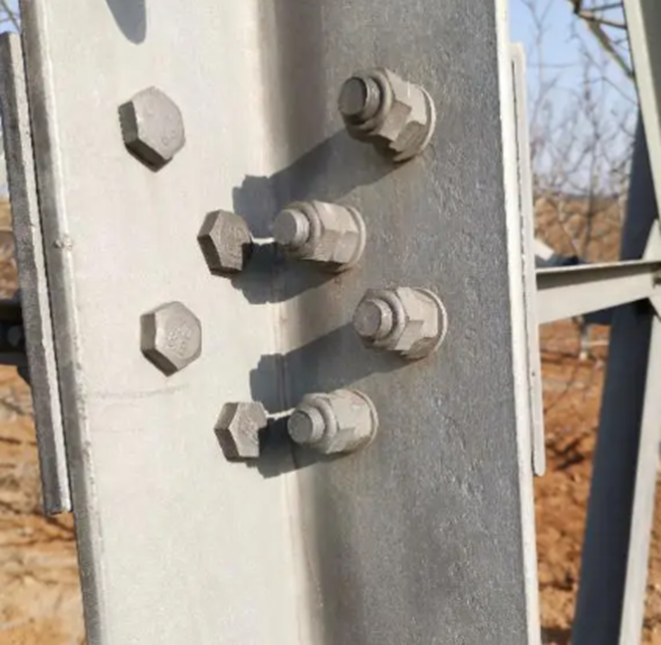
Even more alarming is the chain reaction: a missing bolt leads to reduced stability at the conductor attachment points and hardware connections, causing increased conductor vibration and sway. This triggers a series of failures, including spacer failure, joint overheating, and abnormal sag. A problem with a single bolt could ultimately lead to a tower tilting or even collapsing, circuit breakers tripping, and widespread power outages. In reality, however, most operations and maintenance inspections are most likely to overlook these small fasteners, and a complacent attitude allows these hidden dangers to persist for years.
Conventional bolt protection practices in the industry generally fall into two categories: prevention and response. From the initial installation stage, measures such as using special high-fatigue-resistant bolts and anti-loosening adhesives, along with optimizing installation procedures, are implemented. However, these methods still rely on periodic manual inspections and retightening. Such approaches can only slow down the rate of loosening; they cannot monitor the loosening process in real time or quantify the bolt’s tightening status. In remote mountainous areas and on tall towers spanning rivers, inspection costs remain high, and there are blind spots in safety management.
To achieve round-the-clock monitoring of bolt conditions, it is essential to transition from manual inspections to digital, real-time monitoring. The Dingxin Smart Technology DX-WPS100-LS bolt loosening monitoring device uses an integrated strain gauge technology to accurately monitor bolt loosening, comprehensively covering both stress decay and angular rotation as indicators of loosening, enabling each bolt to autonomously report its health status.
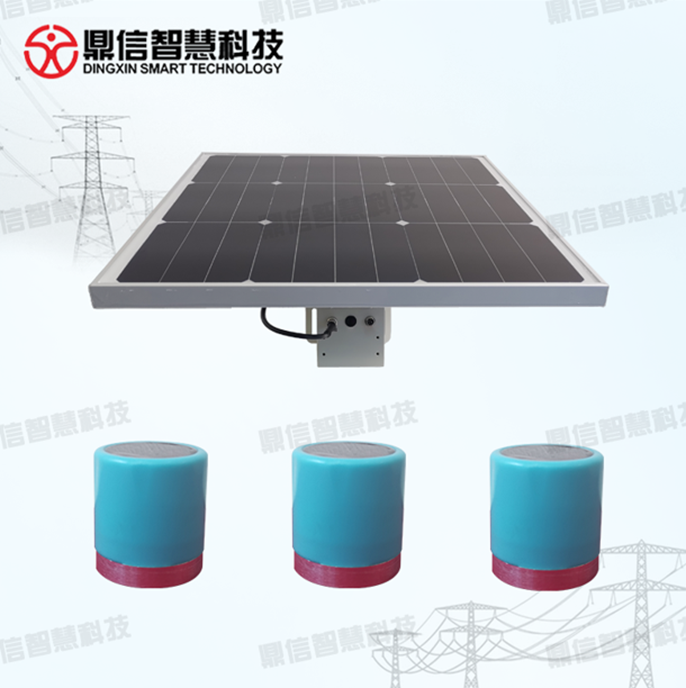
Bolts as Sensors: Stress Detectors That Are Ready to Use Right Out of the Box
The core concept of the device is extremely straightforward: strain gauges are attached to the surface of the bolt (ensuring they adhere completely to the bolt’s surface), and the bolt itself serves as the sensing element. With a design identical to that of a standard washer, it can be installed by simply replacing the existing bolt or washer, without altering the original structure of the tower. When used individually, it monitors stress at a single point; when multiple sensors are interconnected into a network, they can continuously monitor the load status of an entire set of bolts from a single connection point and transmit stress change data in real time.
To put it simply, whereas in the past we had to manually tighten each bolt with a wrench and inspect them one by one with the naked eye, now the bolts themselves transmit their load data.
Key Parameters: Each one is designed to ensure “no data loss and no missed alerts.”
1. Dual-Mode Data Collection
Both automatic and on-demand data collection are supported. Automatic data collection runs at set intervals, with a minimum interval of 5 minutes and a default interval of 30 minutes. On-demand data collection can be initiated remotely, and the collection interval can be flexibly adjusted based on the characteristics of parameter changes. This system covers a wide range of scenarios, from routine inspections to more frequent monitoring during extreme weather conditions.
2. Local high-capacity storage—no interruption even during a power outage
The device accurately records and stores real-time monitoring data and automatically generates event identifiers in the event of anomalies. It stores at least 90 consecutive days of monitoring data, and data that the master station failed to upload due to communication issues is also fully preserved locally. Data security is ensured by adhering to the four “no’s”: no loss due to power outages, no loss due to voltage fluctuations, no deletion due to external access, and no manual deletion or modification allowed. Not a single piece of recorded information can be erased.
3. Multi-level alarms, real-time remote transmission
The system automatically triggers an alarm when data exceeds a preset threshold. It provides alarms for both data exceeding limits and device malfunctions, and the alarm thresholds are configurable. Alarm messages distinguish between different types of issues, such as monitoring data anomalies and device self-test failures, and are transmitted in real time to the monitoring station. Alarm policies can be modified. The system also collects data on the communication signal strength at the monitoring device’s location to facilitate the assessment of data transmission quality.
4. Over half a month of battery life without screen illumination, backed by four layers of power protection
The power supply unit consists of an energy harvesting unit, a battery, and a controller, and features automatic float charging, overvoltage protection, undervoltage protection, overcurrent protection, and temperature compensation. In the absence of sunlight and without any other power source, the battery can sustain the device’s normal operation for at least 15 days.
A single small bolt ensures the safe and stable operation of an entire power transmission line. Dingxin Smart Technology leverages smart sensing technology to monitor these tiny fasteners, making hidden hazards visible and safeguarding the smooth flow of power through the power grid’s “arteries,” thereby ensuring a stable and reliable power supply through digital solutions.