The transmission video-link integration terminal is a new type of edge intelligence device that the power industry—particularly the China Southern Power Grid—has been actively promoting in recent years in the field of smart transmission operation and maintenance. It deeply integrates transmission line monitoring, video/visual networking (video-link), and edge computing, and is one of the key terminals for building a new power system and the Internet of Things (IoT) for the power sector. Among these, the Dianhong (Power HarmonyOS) operating system serves as the IoT foundation that enables standardized device access, data interoperability, and comprehensive autonomy and controllability. The widespread adoption of this innovative terminal is accelerating the transition of power grid transmission operation and maintenance from “traditional manual inspections” to “panoramic intelligent sensing.”
Dingxin Smart Technology Co., Ltd.’s video-telecom convergence terminal products officially passed Dianhong certification last year. Deeply integrated with the Dianhong IoT operating system, they bridge the gap between domestic IoT infrastructure, edge AI large models, and standalone BeiDou positioning and timing capabilities. These terminals enable plug-and-play functionality and unified data aggregation, providing a tiered and categorized edge sensing solution for power lines. Next, Dingxin Smart will focus on introducing the DX-WPS100 series of transmission line video-IoT convergence terminals, including the Standard Model, Basic Model, and Simplified Model.
I. First, Get a Clear Picture of the Current State of Power Operations and Maintenance
According to data released by the National Energy Administration, by the end of 2025, the total length of basic 10-kilovolt to 110-kilovolt power lines nationwide will exceed 9 million kilometers! A vast number of utility poles and towers are scattered across mountainous areas, forested lands, and construction disturbance zones, making them difficult to inspect due to their dispersed locations. Routine periodic inspections cannot detect sudden hazards—such as tree obstructions, wildfires, and external damage—in real time around the clock. Furthermore, the lack of standardization in monitoring device protocols, the high cost of deploying high-specification equipment along the entire line, and the inability of low-specification equipment alone to ensure safety in high-risk sections make it difficult to strike a balance between O&M investments and risk prevention and control.
II. A Detailed Look at the Second and Third TV-Internet Convergence Devices
The standard, basic, and simplified models of the TV-Internet convergence terminal all feature edge AI (with computing power of at least 2.0 TOPS), support 4G communication, Beidou positioning, MQTT, and the GB/T 28181, RTSP, and RTMP protocols. They provide 24/7 video recording at a resolution of at least 1080p, and the device housing has been tested to meet the IP67 rating, enabling integrated day-and-night channel monitoring. Differences lie primarily in observation capabilities, environmental awareness, and battery life.
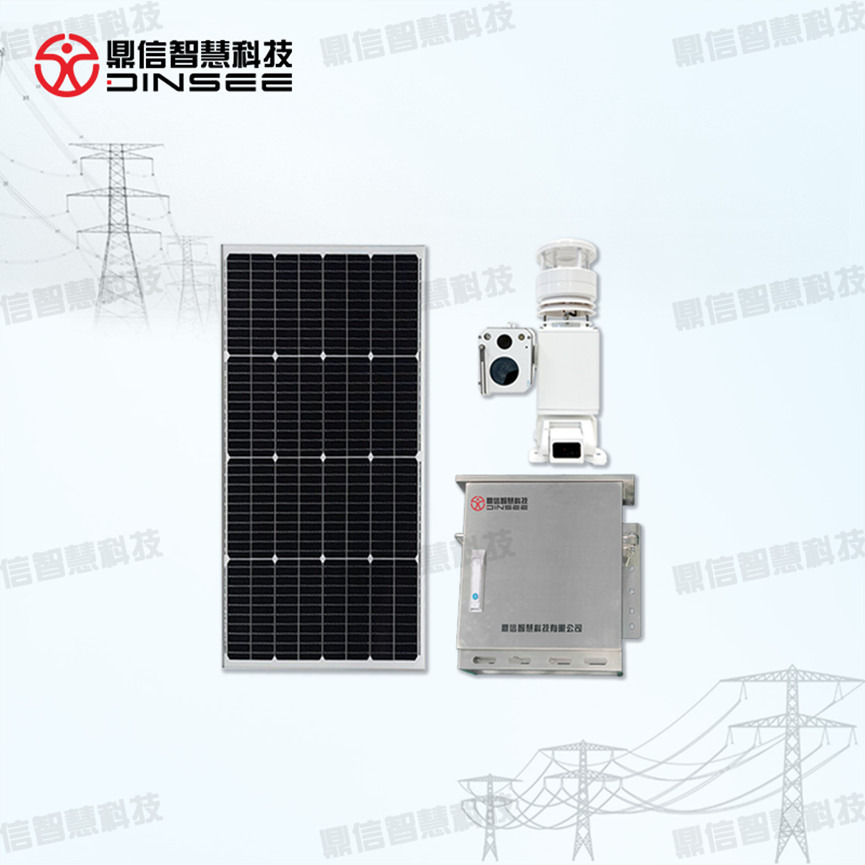
1. TV-Internet Convergence Terminal (Standard Model): Comprehensive Solution for High-Risk Towers
Where to Use: Critical intersections, areas with heavy construction activity, and high-risk wildfire corridors. In these locations, an incident could have far-reaching consequences, so decision-making requires not only visual data but also comprehensive information—such as on-site weather conditions—to support judgment.
There are a few key points regarding the hardware:
Zoom: ≥4 million pixels, 40x; wide-angle: ≥4 million pixels with a field of view ≥110°; rear view: ≥2 million pixels; covers both near and far fields—capable of zooming in on the details of a construction machine’s boom from a distance and showing the tower structure up close.
The front-end system intelligently identifies potential hazards, including smoke and fire detection, construction vehicle detection, and foreign object detection, with AI computing power of ≥2.0 TOPS.
Expand the system with additional sensors, such as a micro-meteorological module, to measure various meteorological parameters—including temperature, humidity, wind direction, and wind speed—in real time.
High-performance 352W solar panels paired with a 2,400 Wh battery ensure continuous power even on cloudy or rainy days.
Supports up to 256 GB of storage; files are cached locally when the internet connection is lost and automatically uploaded once the connection is restored.
BDS BeiDou positioning/timing, with automatic correlation of tower locations.
Problem it solves: High-risk sections are no longer defined by vague hazard criteria, but rather by the upload of real-time, comprehensive hazard data—including imagery, weather conditions, location, and video footage—relating to the transmission towers themselves and the line corridors. This solution is suitable for key transmission lines that require high reliability and have relatively ample budgets.
2. TV-Internet Convergence Terminal (Basic Model): The Best Value Choice for Large-Scale Deployment
Applications: Standard cross-over lines, sections requiring special attention during construction, and utility poles that need to be deployed in large numbers over a wide area—these are generally the categories with the highest usage in a project.
Main differences from the standard model:
Zoom: ≥4 million pixels, 22x; wide-angle: ≥4 million pixels with a field of view ≥110°; rear view: ≥2 million pixels—more than sufficient for typical viewing distances.
By removing the microclimate module, we were able to significantly reduce costs.
Its battery life is slightly shorter than that of the standard model, but it's sufficient in areas with normal sunlight.
Other core capabilities remain unchanged: ≥2.0 TOPS of AI computing power, 256 GB of storage, Beidou positioning, multi-protocol connectivity, audio capture, and more.
The main unit weighs only 5.5 kilograms, and the entire system weighs about 60 kilograms, making installation much easier than with the standard model.
The operating temperature range is from -40°C to +70°C, and it operates normally even in high-altitude and extremely cold regions.
Problem it solves: Deploy monitoring for external damage, foreign objects, and tree obstructions along conventional power lines at a relatively manageable per-point cost. For a municipal utility with several hundred utility poles, implementing the standard model across the board would create significant budgetary pressure; the basic model, however, can achieve “full coverage of key sections and monitoring of standard sections.” The front-end AI directly identifies construction machinery, foreign objects on conductors, and trees that have grown too tall, eliminating the need to transmit all video streams back to the backend—thereby saving bandwidth and server computing power.
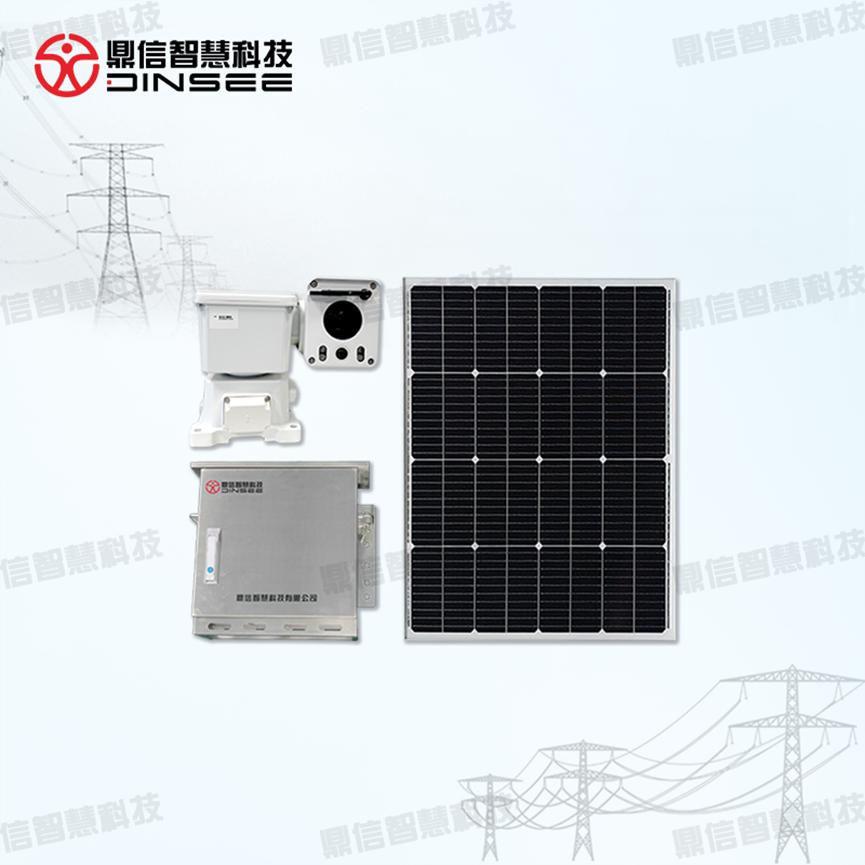
3. TV-Internet Convergence Terminal (Basic Model): Lightweight Supplement for Standard Channels
Applications: General route sections with clear direction, moderate viewing distances, and a large number of monitoring points. Routine operations primarily involve periodic imaging and anomaly detection; video footage can be retrieved for review when an alarm is triggered.
The configuration has been further streamlined:
Zoom: ≥4 million pixels, ≥5x; wide-angle: ≥4 million pixels and field of view ≥110°; rear-view: ≥2 million pixels.
A simple pan-tilt mount with optical zoom, capable of rotating 355 degrees horizontally and -90 to +90 degrees vertically; it provides a sufficient view of the passageway at medium to close range.
Storage capacity has been reduced to 64 GB, with a write endurance of 500 cycles, since the device is primarily used to store snapshot images and alarm recordings, and does not require long-term continuous video recording.
With a standby power consumption of just 0.95 W, it is extremely energy-efficient and can run for an exceptionally long time even on a small battery.
Its AI computing power is also no less than 2.0 TOPS, and it supports object detection and image classification algorithms. Although it is a basic model, it is by no means a “dumb camera.”
The Beidou positioning accuracy is 8.4 meters in the horizontal direction and 10.2 meters in elevation, meeting the requirements for tower alignment.
The main unit weighs only 3.8 kilograms, and the entire system weighs about 30 kilograms, resulting in low installation costs.
Problem it solves: The conflict between “numerous monitoring points and limited budgets” in standard long-distance power transmission lines. While these sections pose low risk, they cannot be completely neglected. By using simplified systems for periodic image capture and anomaly alerts, they supplement the monitoring network for key towers, thereby achieving full coverage of the transmission line.
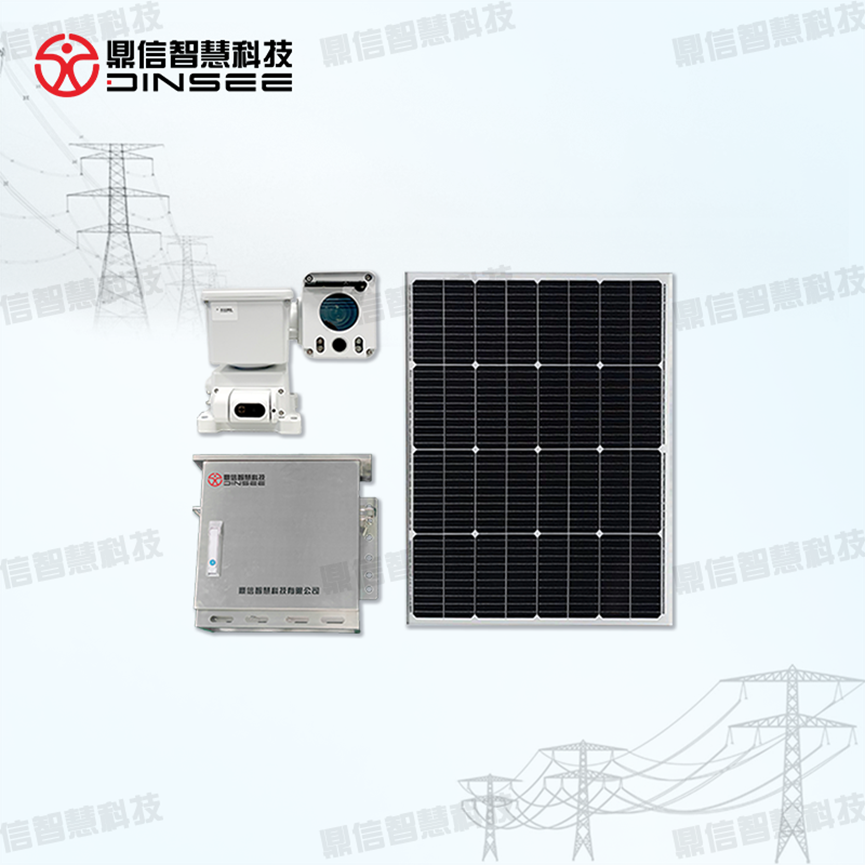
III. Ultimately, what problem does it solve?
In the early days of power line monitoring, the approach was simply “just install a camera,” but it turned out that while there were video feeds, there was no analysis—alerts relied entirely on manual monitoring. Later, AI was added, but because the protocols between devices weren’t standardized, the data didn’t match up. After that, there was an attempt to integrate everything, but the cost per monitoring point was too high, so the initiative stalled.
The concept behind the video-telecom convergence terminal is actually quite straightforward: integrate what needs to be integrated, and clearly distinguish what needs to be categorized. Image capture, edge AI, BeiDou positioning, energy storage and power supply, and IoT communication—these are all required for every transmission tower and are integrated into a unified base unit; lens magnification, weather modules, battery capacity, and storage size are selected based on risk levels. This is not simply an “upgraded version of a field camera,” but rather an edge sensing node for power transmission lines. AI performs recognition at the terminal, transmitting only structured events and necessary video footage back to the server, thereby minimizing the load on the backend server.
All of the above equipment specifications are sourced from official documentation provided by Dingxin Smart Technology Co., Ltd. The specific model selection requires a comprehensive assessment based on factors such as line voltage rating, risk assessment, on-site lighting conditions, and platform integration protocols.
IV. Building a Smart Future for the New Power System Together
Dingxin Smart has actively embraced the Dianhong ecosystem and has already completed system integration and optimization for several in-house developed hardware devices, including power grid hazard monitoring sensors, AI edge computing boxes, and single-Beidou positioning devices. As the Dianhong operating system continues to evolve and AI large-model technology is further deployed on the device side, future vision-and-communication-integrated terminals will possess stronger cognitive and decision-making capabilities, providing a smarter and more resilient power supply to keep the lights on in every home!