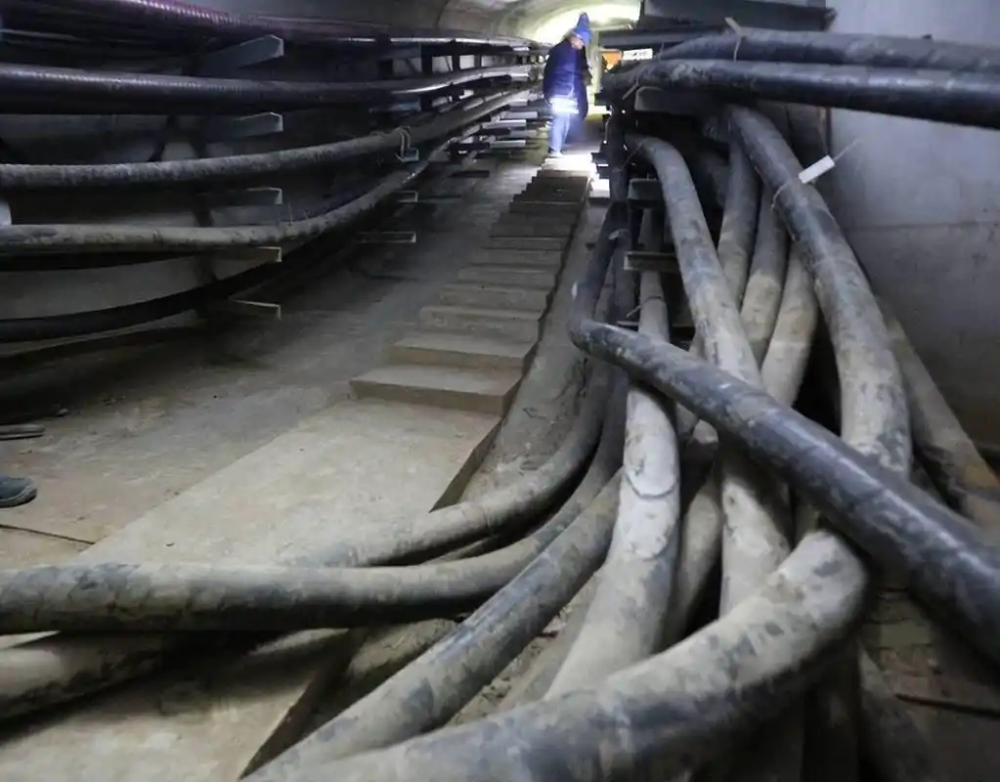
In the field of power system operations and maintenance, maintenance personnel are constantly faced with two major challenges: first, construction site cranes accidentally severing underground cables; and second, overhead cables along roadsides being struck by vehicles without being detected in a timely manner. These two types of external-force-induced failures are highly unpredictable and pose significant risks, yet traditional operations and maintenance models are ill-equipped to prevent or control them. This not only causes great concern among maintenance personnel but also seriously compromises the stability and safety of the power supply.
I. Key Challenges Associated with External Force-Induced Cable Failures
1. Hidden Hazards of Underground Cables: Since underground cables are buried and out of sight, construction companies often do not know their exact routes. When heavy machinery such as cranes and excavators is in operation, there is a high risk of severing these cables. Once a failure occurs, it not only causes widespread power outages that disrupt business operations and daily life but may also lead to safety incidents such as electric shocks and fires. Furthermore, subsequent emergency repairs are difficult and time-consuming.
2. Hazards Posed by Overhead Cables: If roadside overhead cables are struck by vehicles and the damage goes undetected, the exposed cables—when exposed to adverse weather conditions such as wind, rain, and humidity—can easily cause short circuits and electrical leaks, thereby expanding the scope of the malfunction. Furthermore, broken cables that fall onto the road pose a serious safety threat to pedestrians and passing vehicles.
3. Shortcomings of Traditional Operations and Maintenance: Traditional manual inspections have long cycles and limited coverage, making it impossible to achieve 24/7 monitoring. In the event of sudden incidents—such as construction site accidents or vehicle collisions—it is difficult to detect them in a timely manner. Often, operations and maintenance personnel do not discover and address the issue until the problem has escalated and damage has already occurred. This reactive operations and maintenance model fails to meet prevention and control requirements.
II. Targeted Solutions
Addressing the challenges in preventing and controlling external force-induced faults mentioned above, Dingxin Smart Technology’s DX-DLS100-GS Cable Duct External Damage and Anomaly Monitoring Device—backed by extensive experience—establishes a comprehensive, intelligent monitoring and early-warning system. This system completely overcomes the shortcomings of traditional operations and maintenance, enabling early detection, early warning, and early response to external force-induced faults, thereby ensuring the safe operation of cables.
By installing smart markers (posts) and video surveillance devices above the cable ducts being monitored, the system creates a three-dimensional monitoring network that comprehensively detects any unusual activity around the ducts, thereby facilitating a shift in operations and maintenance from “reactive repairs” to “proactive prevention and control.”
III. Core Monitoring Functions of the Device
1. Abnormal Activity Alerts: When construction activity occurs near a smart sign (post) or energy pipelines are illegally damaged, the resulting vibration signals immediately trigger the device, which promptly uploads the external damage alert data to the backend system. At the same time, it activates nearby cameras to stream real-time video of the scene, allowing backend personnel to visually assess the situation on-site.
2. Multi-device Integrated Monitoring: By intelligently coordinating smart stakes and visual video monitoring devices, this system eliminates blind spots caused by single-source monitoring, further enhancing the comprehensiveness and accuracy of monitoring to ensure that potential hazards caused by external forces are detected without exception.
3. Rapid Early Warning Notifications: Upon receiving an alarm, the backend system immediately displays an alert and sends an SMS notification to operations and maintenance personnel, prompting them to proceed to the site promptly to address the issue, thereby minimizing response time and reducing losses.
4. Image Archiving and Traceability: Supports scheduled and event-triggered screen captures, automatically archiving on-site image data to provide strong evidence for fault analysis, liability determination, and subsequent operational and maintenance optimization.
IV. Key Technical Highlights of the System
1. Sensitive Vibration Monitoring: Equipped with a built-in vibration sensor, the device immediately triggers a background alarm and activates a warning light as soon as it detects vibration (such as from mechanical impact or excavation work), alerting construction workers on-site to stop dangerous operations.
2. Low-Power, Long-Duration Operation: Utilizing a dual-power supply system (battery and solar), combined with a built-in low-power algorithm, the device operates stably for extended periods without requiring an external power source, making it ideal for outdoor settings without access to electricity.
3. High-Efficiency Wireless Communication: Utilizing CAT-1 communication technology, this system addresses the shortcomings of both poor NB-IoT signal coverage and high 4G power consumption, ensuring the stable transmission of alarm data and video information regardless of environmental conditions.
4. Precise Alarms Through Multi-Sensor Fusion: By integrating Beidou positioning, 3-axis acceleration sensors, and tablet vibration technology, this system maximizes alarm accuracy and prevents false alarms and missed alarms.
5. Precise Location Tracking for Convenient Maintenance: Equipped with a built-in BeiDou/GPS positioning chip, the device can track its location in real time, allowing maintenance personnel to quickly pinpoint the location of a fault and improve emergency repair efficiency.