The stable operation of the power grid has become extremely important. Why is that? Let our editor explain in detail.
The power grid is like a city’s “blood vessels.” Once hidden dangers emerge or a failure occurs, everything from the daily electricity use in every household to industrial production and public services will be severely affected. The hidden dangers in the power grid are far more subtle and dangerous than we imagine, which is precisely why its stable operation cannot tolerate even the slightest negligence.
First are the hazards at the transmission line level. High-voltage transmission lines are exposed to the elements year-round; exposure to wind, sun, rain, and snow can cause the lines to age and insulators to break, making them highly prone to electrical leaks and short circuits. Fallen trees, collisions with construction machinery, tangled kite strings, and even birds’ nests can all damage the lines and trigger circuit breakers, leading to power outages.
Next are potential hazards at the equipment level. Equipment such as substations and distribution panels operates under high loads for extended periods, causing components to wear out and wire connections to loosen. If these issues are not addressed promptly, they can lead to overheating and arcing; in severe cases, they may cause fires or equipment explosions, threatening the safety of the power grid.
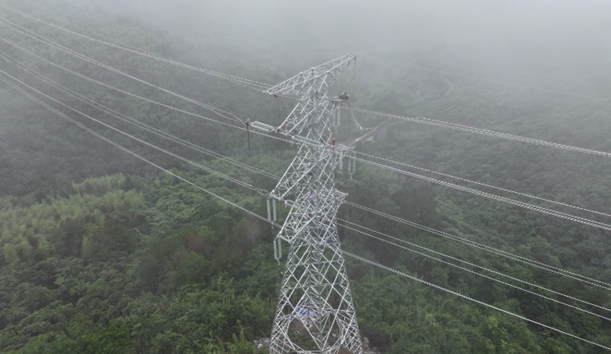
In addition, extreme weather serves as a “silent killer” for the power grid. Heavy rain, lightning, blizzards, and extreme heat can damage power lines and equipment, leading to ice buildup on lines and the collapse of utility poles, which in turn trigger widespread power outages. Once the power grid fails, not only are residents unable to use electricity normally, but critical sectors such as hospitals, transportation, and communications also grind to a halt. Industrial production is forced to cease, resulting in massive economic losses and even jeopardizing public safety.
To accurately identify and prevent potential power grid hazards and ensure stable grid operation, Dingxin Smart Technology’s Line Video PTZ Online Monitoring Device (AI PTZ Camera) DX-WPS100-SP uses intelligent video monitoring to overcome the limitations of manual inspections and comprehensively safeguard the security of transmission lines. The device integrates core components such as a main controller, communication module, power supply, and AI PTZ camera. Powered by a combination of solar energy and lithium batteries, it transmits real-time video data to the monitoring center via 4G, 5G, Wi-Fi, or OPGW fiber-optic networks, enabling real-time monitoring across all scenarios—including transmission line patrols, prevention of external damage, detection of overhanging trees, and construction site management.
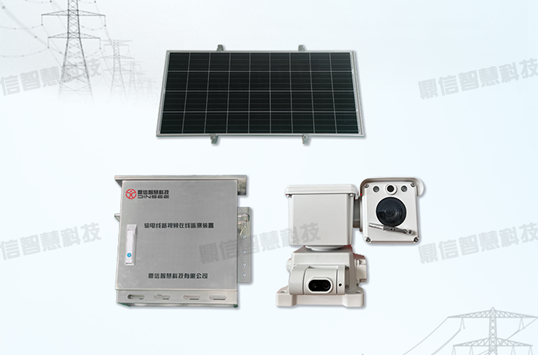
The device offers outstanding practicality and significant technical advantages: 200W high-definition 1080p video, paired with a 360° panoramic pan-tilt unit and 40x/20x hybrid zoom, enables beyond-line-of-sight dynamic patrols; 255 preset positions and 16 patrol routes provide comprehensive coverage of all scenarios; starlight-level night vision technology, with a minimum illumination of 0.001 lux, clearly detects potential hazards both day and night.
Its intelligent capabilities are particularly notable. Equipped with lightweight, low-power AI algorithms, it enables intelligent on-device identification of potential hazards; for specific risks such as wildfires, it can activate “AI + video” recording for evidence collection. It supports edge data aggregation and integration via standard power grid protocols, allowing seamless integration into internal video platforms. The front-end unit provides 24-hour loop recording, and an optional built-in encryption chip ensures data security. The device is designed for complex outdoor environments, featuring easy installation and efficient operation and maintenance. It mitigates power grid hazards at their source, building a robust intelligent defense line to ensure the stable operation of the power grid.