
I. Requirements Analysis
The fundamental challenge quantum computing poses to modern cryptography intersects with the core security requirements of T-cards as digital identity carriers. During this critical window period as quantum computing transitions from laboratory research to practical application, quantum-secure T-cards have evolved from a technological foresight into an industrial necessity. They represent a direct and effective endpoint security solution to counter the "quantum threat."
II. Working Principle
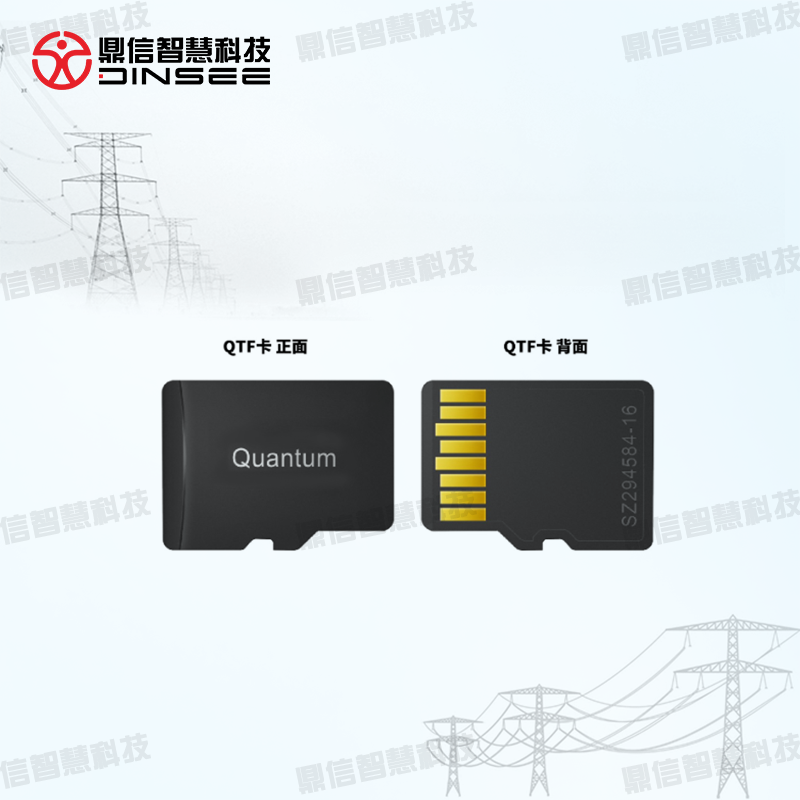
The Quantum Security T-Card is a specialized TF card designed to meet user requirements for offline quantum key applications, featuring secure quantum key storage and data encryption/decryption capabilities. It consists of three components: the TF card hardware interface, a security chip, and a secure storage medium. The security chip incorporates an encryption chip and information security firmware. The Quantum Secure T-Card offers quantum key secure storage, secure data storage, and data encryption/decryption capabilities. It finds broad application in PKI authentication, digital signatures, data (real-time) encryption/decryption, and secure data storage.
III. Features and Functions
1. Supports identity authentication;
2. Supports data encryption and decryption;
3. Supports secure key storage;
4. Supports secure data storage;
5. Compact and convenient, easy to integrate.
IV. Typical Applications
1. Security of the Power Dispatch Command System
① Five-tier Dispatcher Identity Authentication: Within the National Dispatch-Network Dispatch-Provincial Dispatch-Regional Dispatch-County Dispatch system, quantum-secure T-cards are inserted into dispatcher terminals to provide quantum-level identity authentication, preventing command hijacking and data tampering.
② Dynamic encryption with one-time passwords: The quantum random number chip within the card generates truly random keys, using a different key for each communication session. Even if intercepted, these keys cannot be cracked, reducing the error rate from the traditional 1e-6 to 1e-18.
③ Provide quantum-level protection for SCADA system "four remote" operations to prevent malicious command injection;
④ Through dual authentication via quantum T-card and password, only authorized personnel can execute critical operations. All operation records are fully quantum-signed, enabling traceable accountability.
2. Intelligent Operation and Maintenance Security for Substations
① Insert the quantum-secure T-card into the TF card slot of the substation's measurement and control device to generate quantum session keys for IEC 61850 protocol communication, preventing tampering with control commands;
② Equip core substation equipment with "quantum-secure locks" to prevent unauthorized access;
③ Before drone/robot inspections, obtain temporary certificates and encryption keys via quantum-secure T-cards to ensure secure transmission of image and device data.
④ On-site maintenance personnel carry quantum-secure T-cards to enable two-way authentication and operational authorization prior to equipment maintenance.
3. Security Upgrade for Distribution Network Automation
① Insert quantum-secure T-cards into distribution terminals such as FTUs, DTUs, and TTUs to establish secure channels via the 5G public network, reducing construction costs by 70%;
② Quantum T-cards provide device identification and dynamic authentication for distributed FA, preventing "fake switch" attacks.
4. Grid Integration Safety Assurance for New Energy Sources
① The photovoltaic substation voltage intelligent control terminal comes standard with a TF card interface. Inserting a quantum-secure T-card enables "low-cost, high-security" wireless remote control and regulation.
② Wind farms and photovoltaic power stations encrypt AGC/AVC commands via quantum T-cards to prevent "pseudo-grid connection" and tampering with power generation data.