
Cable temperature monitoring is essential because heat is the most direct cause of cable failures and even fires. Cables are typically encased in insulation. When short circuits, overloads, or partial discharges occur, temperatures can rise rapidly. If these temperatures exceed the insulation material's tolerance limit, the insulation may soften, carbonize, or—in severe cases—break down, leading to cable fires. Currently, online temperature monitoring enables the most effective early warning at the source, preventing mass-casualty fires.
The operational essence of Dingxin Smart Technology's DX-DLS100-CWDistributed Fiber Optic Temperature Monitoring System lies in transforming ordinary optical fibers into "sensory nerve fibers" with perception capabilities. Its detection logic is based on Raman scattering and optical time-domain reflectometry (OTDR). By installing temperature-sensitive optical cables directly on the cable surface, it enables dynamic monitoring of temperature changes across cables spanning tens of kilometers with a resolution as high as 0.1°C. This system rapidly and systematically captures minute temperature differentials, precisely pinpointing the exact physical location where heat fluctuations occur, thereby achieving comprehensive spatial mapping without blind spots along the entire line.
The device integrates without altering the cable's original connections, seals, insulation, or electrical integrity, ensuring field equipment operates as before. Its central tubular structure meets minimum cable bending radius requirements while strictly preventing breakage risks. Leveraging standardized communication protocols, the system seamlessly integrates into existing monitoring architectures, supports large-scale data collection and interaction, and offers exceptional horizontal scalability potential.
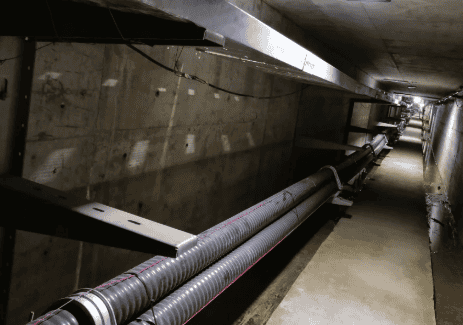
From its installation method alone, we can see that the distributed fiber optic temperature monitoring system breaks through the limitations of traditional cable-based sensing monitoring, which is confined to "point-based monitoring." It achieves "line-based monitoring" spanning several kilometers. This continuous, dynamic, and real-time digital sensing capability makes it the preferred technical solution for high-risk monitoring applications such as smart power grids, underground rail transit, petrochemical facilities, and large-scale water conservancy projects. This undoubtedly provides core technological assurance for the full lifecycle management of industrial assets.