
The sensor is the first component in the Distribution Network Traveling Wave Fault Early Warning and Location Device DX-WPS100-GZ03 responsible for acquiring electrical parameters from the line; its performance specifications directly determine the device’s overall sensing capability and measurement accuracy. Fault traveling wave signals on distribution network lines exhibit distinct characteristics such as wide bandwidth, large amplitude variations, and short duration. This requires the sensor not only to sensitively capture minute high-frequency traveling wave components but also to prevent magnetic saturation under high-current surges of hundreds of amperes, while simultaneously ensuring accurate measurement of power-frequency electrical parameters. These comprehensive performance requirements—wide bandwidth, wide measurement range, and high linearity—pose significant engineering challenges for the sensor’s structural design and material selection.
The traveling wave current sensor is the most technologically advanced core sensing component in the system. Unlike traditional power-frequency current transformers, traveling wave sensors must maintain a flat frequency response across a wide frequency range spanning from hundreds of hertz to several megahertz. Currently, Rogowski coils are the primary sensing elements used for traveling wave monitoring in distribution networks. A Rogowski coil is essentially a hollow coil uniformly wound around a non-magnetic core. The conductor under test passes through the center of the coil, and the alternating current flowing through the conductor induces a voltage signal at both ends of the coil that is proportional to the rate of change of the current. Since it contains no ferromagnetic material, the Rogowski coil does not suffer from magnetic saturation and exhibits excellent linearity, making it naturally suited for measuring current signals across a wide dynamic range from a few amperes to several thousand amperes. In the traveling wave frequency band, the parasitic capacitance and distributed inductance parameters of the Rogowski coil determine its upper limit of high-frequency response. By optimizing the number of coil turns, cross-sectional dimensions, and shielding structure, the effective measurement bandwidth can be extended to the megahertz range, meeting the requirements for complete acquisition of high-frequency components in fault traveling waves.
The voltage signal output by the Rogowski coil is proportional to the rate of change of the current; to obtain the actual current waveform, it must be restored via an integration circuit. The distribution network traveling wave fault early warning and location device DX-WPS100-GZ03 employs an active integrator in the signal conditioning stage to perform real-time integration of the Rogowski coil output. It also incorporates self-resetting and drift suppression mechanisms to prevent baseline shifts caused by zero-point drift in the integrator after prolonged operation. The integrated analog signal passes through a gain-controlled amplification circuit before entering the analog-to-digital converter (ADC). The gain setting automatically switches based on the signal amplitude, ensuring that whether the traveling wave current is a small signal of 1 A or a large signal of 500 A, the ADC’s dynamic range is fully utilized for quantization. This prevents weak signals from being overwhelmed by noise or strong signals from being clipped due to overflow.
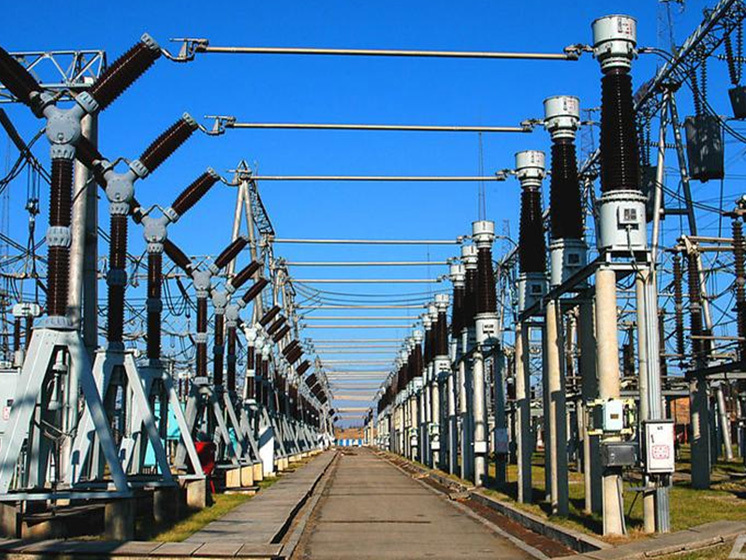
In terms of sensor installation, the Roe coil features an open-type clamp-on design. Installation requires no disconnection of the power lines; simply align the coil’s opening with the power line, close it, and lock it in place. The entire process can be performed while the system is energized, without causing any disruption to normal line operation. An appropriate electrical clearance is maintained between the coil and the power line to meet insulation safety distance requirements. The open-type design also facilitates sensor replacement or maintenance without affecting line operation.
In addition to traveling-wave current sensors, the system is typically equipped with power-frequency current and voltage acquisition units. Power-frequency current acquisition can reuse the integrated output signal from the traveling-wave Rogowski coil to extract the power-frequency fundamental and low-order harmonic components in the low-frequency band; power-frequency voltage acquisition obtains voltage signals via capacitive voltage division from the conductor coupling. The outputs of each sensing unit are uniformly coordinated by a multi-channel synchronous sampling system to ensure a precise time correlation between the traveling-wave signals and the power-frequency signals. The multi-channel synchronous acquisition architecture enables the Distribution Network Traveling Wave Fault Early Warning and Location Device DX-WPS100-GZ03 to simultaneously extract both traveling wave and power frequency characteristics from the same data set, providing comprehensive electrical parameter support for fault location and fault type identification.