
To ensure the stable operation of power distribution lines, the key lies in shifting from “reactive measures” to “proactive prevention.”
I. Project Background
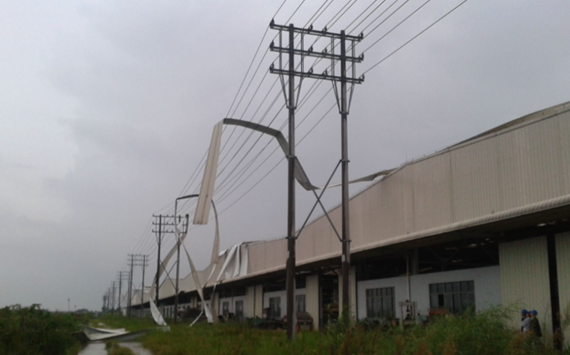
The stable operation of power distribution lines is of critical importance, but currently, challenges such as difficulty in locating line faults, significant impacts of power outages, and hidden hazards that are hard to detect remain. Hidden defects—such as aging line insulation, oxidized joints, and contact with overhanging trees—are often difficult to effectively monitor for deterioration through traditional manual patrols and periodic inspections. As a result, these defects frequently escalate into permanent faults under specific triggering conditions, causing unplanned outages that severely impact power supply reliability and the customer experience. Therefore, achieving early detection and precise localization of potential line hazards has become key to enhancing the resilience of distribution networks and enabling proactive operations and maintenance.
II. Solutions
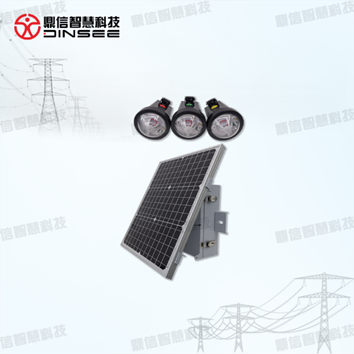
Provided by Dinsee Smart TechnologyWaveform-Recording Transient Fault Monitoring Device (Overhead Lines)JYL-DX uses a data acquisition module to collect information, record waveforms, and identify faults on distribution lines. The device performs real-time sampling of line current and high-speed waveform recording. Combined with big data analysis from the master station system, it accurately determines fault types, detects and indicates short-circuit and ground faults, rapidly locates the faulty section, and transmits the information to the monitoring center. This enables staff to analyze and identify the cause and location of the fault, and promptly notify circuit management personnel to address the issue and restore the distribution line to service.
III. Technical Advantages
1. Reliable Power Supply and Communications: A highly reliable power supply system utilizing solar energy and maintenance-free batteries for primary and backup power ensures the stable operation of the device; a hybrid network combining short-range and long-range wireless technologies enables real-time, bidirectional communication between the master station and the aggregation units, ensuring timely transmission of information.
2. Precise Time Synchronization and Time Distribution: Features high-precision (±100 μs) three-phase wireless time synchronization and high-precision (1 μs) GPS time distribution capabilities to obtain accurate absolute timestamps, providing a precise time reference for fault analysis.
3. Precise Fault Detection and Location: By combining three-phase data to obtain transient zero-sequence current and electric field signals, the system enables precise on-site detection and location of ground faults; the optimized design of the electric field sensors ensures that they are not affected by multiple circuits mounted on the same pole, allowing for accurate identification of line voltage sags and power outages.
4. Advanced Measurement and Waveform Recording Technology: Utilizes advanced electronic current transformers to achieve a line current measurement accuracy of ±1%; intelligently triggers high-speed recording (4 kHz) of line current and ground-to-air electric field signals to capture instantaneous transient waveform signals from low-current ground faults; high-precision wireless time synchronization enables the simultaneous acquisition of three-phase current and ground-to-air electric field waveforms.
5. Convenient Maintenance and Management: Features channel monitoring, switching, and fault alarms, as well as system diagnostics and self-healing capabilities; supports remote wireless maintenance and upgrades, as well as SMS management; can be installed and removed without powering down; meets IP66 protection rating, making it suitable for various harsh environments; incorporates innovative low-current (5A) self-powered technology to ensure stable real-time online operation, along with low-power wireless bidirectional communication that supports remote software upgrades and maintenance.