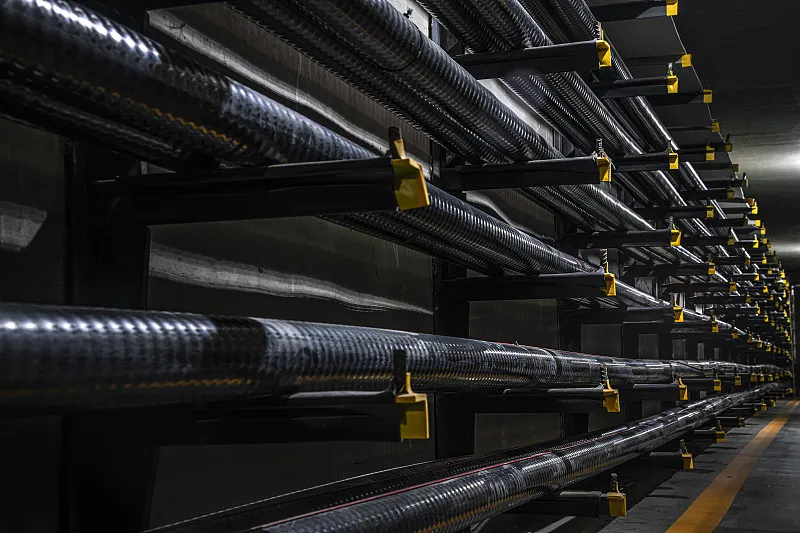
Cable faults are a common issue in power system operations and maintenance.
I. Types of Faults
1. Insulation Faults (Most Common): These account for more than 60% of cable faults. They are often caused by the cable insulation being exposed to prolonged effects of temperature, humidity, and chemical corrosion, leading to aging, cracking, and damage. This results in a decline in insulation performance, causing electrical leakage and short circuits. These faults are commonly found in aging cables, cables in damp underground environments, or cables with poorly executed joints where the insulation layers are not tightly connected, creating weak points in the insulation that eventually lead to breakdown failures after prolonged operation.
2. Mechanical Damage: This is often caused by external forces and is the primary cause of sudden failures. For example, during construction excavation, if the cable route is not verified, the cable may be run over or struck by machinery; during cable installation, excessive pulling or an excessively small bending radius can damage the conductor and rupture the insulation; outdoor cables exposed to strong winds or lightning strikes may suffer damage to their outer sheath, which can lead to internal short circuits.
3. Conductor faults: These primarily manifest as conductor breaks, poor contact, or conductor overheating. These are often caused by loose crimping at cable joints, which leads to excessive contact resistance during long-term operation, resulting in overheating that burns out the joint and causes an open circuit; or by prolonged cable overloading, where conductor heating accelerates insulation aging and may even melt the conductor, triggering a failure; in addition, oxidation and corrosion of conductors in some older cables can also degrade electrical conductivity and lead to failures.
4. Faults in Accessories: Cable accessories (joints and terminations) are areas prone to frequent faults. Improper joint fabrication and poor sealing can allow moisture and impurities to penetrate, leading to insulation breakdown; aging and cracking of the insulation layer in terminations can cause electrical leakage due to environmental factors; and substandard materials in accessories can degrade over time, rendering them unable to provide insulation and protection, which in turn leads to system-wide failures.
In addition, environmental factors—such as high temperatures, extreme cold, humidity, and acidic or alkaline soil—can accelerate the occurrence of various types of failures. Meanwhile, cables that have not been inspected for long periods or have not been properly maintained can allow potential hazards to remain latent, ultimately leading to failures that affect the stable operation of the power system.
II. Solutions
In response to the above issues, the High-Voltage Cable Fault Precision Locating Device DX-WPS100-GZ02, developed by the experienced Dingxin Smart Technology, is based on intelligent sensing, traveling wave analysis, and artificial intelligence. It is designed to drive a transformation in the operations and maintenance model—shifting from “reactive repairs” to “proactive early warning and precise maintenance.”
III. Core Principles and Architecture of the System
This system employs a distributed architecture based on “front-end intelligent sensing + cloud-based intelligent diagnostics.” High-precision monitoring devices are deployed at key points along the cable line (such as both ends, joints, T-junctions, and cable-to-overhead-line transition points) to form a real-time sensing network. Data is uploaded via a secure channel to the cloud-based intelligent diagnostics platform for analysis, decision-making, and early warning.
1. Core Principles:
1.1 Rapid and Accurate Fault Location (Traveling Wave Method): The moment a fault occurs in a cable, a high-frequency current/voltage traveling wave signal is generated at the fault point and propagates toward both ends of the cable at a speed close to that of light. Monitoring devices at both ends of the line, based on high-precision synchronized clocks (GPS/Beidou, with synchronization accuracy better than 1 microsecond), precisely capture and record the arrival time of the initial traveling wave front. Using the dual-end traveling wave distance measurement principle of “wave velocity × time difference / 2,” the system can automatically calculate and pinpoint the fault location within 30 seconds, with a positioning accuracy of within ±10 meters, completely transforming the traditional situation of time-consuming and low-accuracy fault location.
1.2 Early Warning and Localization of Hidden Hazards (AI Diagnosis): Latent defects, such as insulation degradation and poor contact, generate characteristic partial discharge (PD) traveling wave signals before they develop into permanent failures. The monitoring devices in this system feature wide bandwidth and high sensitivity, enabling them to continuously capture these faint signals. The deep learning algorithm model built into the cloud-based diagnostic platform has been trained using a massive database of fault patterns and is capable of automatically extracting, identifying, and classifying signal characteristics of different defect types (such as corona discharge, surface discharge, and internal discharge). Through time-difference analysis and intelligent correlation of signals from multiple monitoring points, the system can not only determine the type and severity of potential hazards but also precisely locate their origin, thereby shifting the focus from “treating existing problems” to “preventing potential problems.”
IV. Design of Key Technical Functions
1. Full-state awareness and multi-parameter fusion:
The monitoring device not only collects traveling wave signals but also simultaneously monitors operational parameters such as power-frequency current, voltage, and cable surface temperature, thereby generating a multidimensional dataset.
Through the fusion and analysis of information from multiple sources, it is possible to comprehensively evaluate the condition of cable insulation, current-carrying capacity, and joint integrity, thereby providing comprehensive data support for condition-based maintenance.
2. Adaptation to Complex Circuit Topologies and Identification of Faulted Sections:
For cable T-junctions and mixed cable-overhead line circuits, install additional monitoring devices at branch points and junction points.
Through logical and topological analysis of multi-point signals, the system can automatically and quickly identify the specific section where a fault has occurred (such as the main cable, branch cable, or overhead line section), rapidly narrowing the fault search range from tens of kilometers to hundreds of meters, thereby significantly improving the efficiency of fault troubleshooting on hybrid lines.
3. Intelligent Tiered Early Warning and Decision Support:
Based on the frequency, amplitude, phase, and trends of latent discharge signals, the diagnostic platform establishes a three-tier early warning model: “Caution—Abnormal—Severe.”
The system automatically generates a comprehensive diagnostic report that includes the location, type, severity level, trend, and recommended actions for potential issues. This report is pushed in real time via a web client, mobile app, and text messages to guide operations and maintenance personnel in conducting precise condition-based maintenance.
4. 24/7 Unmanned Intelligent Operations and Maintenance:
The system provides round-the-clock automated monitoring, analysis, and reporting. In the event of a failure, it can locate the issue and trigger an alert within one minute; for potential hazards, it provides continuous tracking and trend-based early warnings.
All historical data, event logs, and analysis reports are automatically archived to create a health record covering the entire lifecycle of the cables, providing a data foundation for asset management and the optimization of operations and maintenance strategies.
V. Implementation Plan and Expected Benefits
1. Deployment Plan: Applicable to cable lines at all voltage levels from 110 kV to 500 kV. Monitoring devices are installed at key nodes based on line length and topology, and connected via fiber-optic or wireless private networks to a unified monitoring master station or cloud platform.
2. Core Values and Benefits
1.1. Improve Power Supply Reliability: Reduce the average time required to locate and isolate faults by more than 90%, thereby significantly reducing the duration and scope of power outages.
1.2. Reduce O&M Costs: Significantly reduce the manpower and resources required for fault inspections; promote a shift from scheduled maintenance to precision condition-based maintenance; extend equipment service life; and optimize the allocation of O&M resources.
1.3. Mitigating Major Risks: By detecting and issuing early warnings for latent hazards, we can prevent defects from escalating into breakdown failures and effectively prevent and control power grid safety incidents caused by cable failures.
1.4. Implementing Smart Management: Establishing a digital, visual, and predictive health management model for cable assets is a key component of building smart grids and digital substations.