I. The Challenge of High Temperatures?
People hate the heat—let alone power transmission towers.
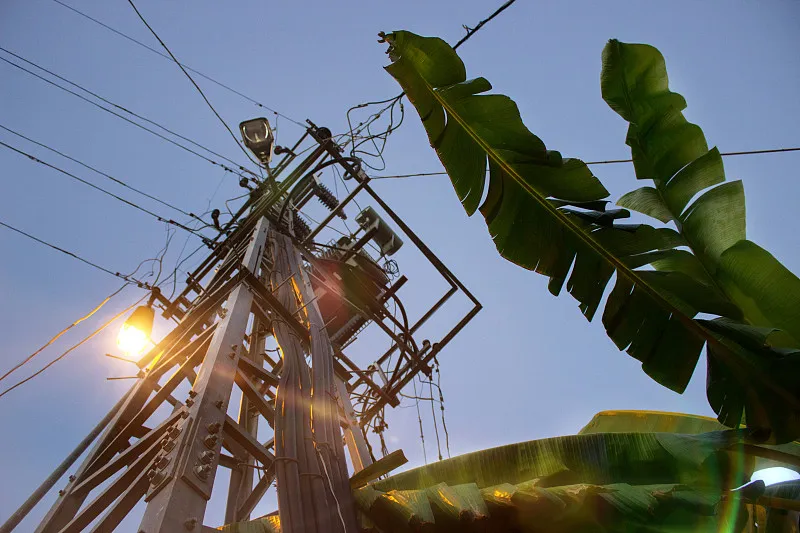
As the “backbone” of power transmission lines, power transmission towers stand outdoors year-round. Under the intense heat and direct sunlight of summer, their temperatures can rise sharply, posing far greater risks than one might imagine and directly threatening the stable operation of the power grid—the stability of which is crucial to the safety of electricity supply for millions of households and the normal functioning of society.
High temperatures accelerate the aging of steel tower materials. Under sustained high temperatures, steel loses strength and becomes less ductile; prolonged exposure to sunlight can lead to rust and cracking. In severe cases, this can cause the tower to tilt, deform, or even collapse, resulting in power line outages. At the same time, high temperatures cause components on the towers—such as line joints and insulators—to expand due to heat, resulting in poor contact and reduced insulation performance. This can easily lead to electrical leakage and short circuits, triggering circuit breakers to trip and disrupting power supply.
High temperatures also increase the load on power lines. Combined with peak summer electricity demand, this places greater strain on transmission towers, doubling the likelihood of potential hazards. Should a failure occur, not only would residential power be affected, but industrial production and public services would also come to a standstill, resulting in enormous losses.
II. Solutions
To effectively address the aforementioned O&M challenges, Dingxin Smart Technology has developed the DX-WPS100-SP2 overhead line infrared thermal imaging dual-lens PTZ camera. The device primarily relies on dual-spectrum infrared and visible-light video monitoring. Powered by solar energy and lithium batteries, it uses front-end dual-spectrum dome cameras to capture video data, which is then transmitted to the monitoring center via 4G, 5G, Wi-Fi, or OPGW fiber-optic networks. This enables real-time monitoring and early warning for transmission line tower equipment, ensuring the stable operation of the lines.
III. Core Strengths
1. Temperature Monitoring and Early Warning: Equipped with dual-spectral infrared capabilities, it monitors the temperature of tower equipment in real time, promptly detects thermal anomalies, and issues early warnings to prevent failures caused by abnormal temperatures.
2. Image Fusion Display: Supports visible light and thermal imaging picture-in-picture and image fusion, allowing monitoring personnel to gain a more intuitive and comprehensive understanding of equipment status.
3. Inspection Report Generation: Supports automatic generation, online viewing, and one-click export of infrared inspection reports, making it convenient for operations and maintenance personnel to assess and analyze equipment status.
4. Comprehensive Dynamic Monitoring: The pan-tilt unit supports 360° horizontal rotation and -90° to +90° vertical rotation. Combined with 40x optical zoom, it enables comprehensive monitoring of the tower’s condition, as well as details such as hardware, insulator strings, conductors, and right-of-way.
5. Intelligent Analysis and Recognition: Based on industry-specific, deeply customized intelligent analysis algorithms, this system supports image capture and analysis as well as AI-powered object recognition, enabling the precise identification of potential hazards.
6. Automatic Line Patrols: Supports automatic line patrols and automatic video patrols. Patrol modes can be flexibly configured, including information such as the operation cycle, operation time, and patrol route.
7. Multiple Operating Modes: Features various operating modes, including sleep mode, scheduled snapshot, real-time video, and 24/7 operation, to accommodate different operational needs.
IV. Technical Highlights
1. Powerful Smart Features: Intelligent AI features—including fog penetration, intelligent exposure (AE), and intelligent autofocus (AI)—ensure clear images in a variety of challenging environments.
2. Convenient Remote Control: Through the monitoring center platform, you can turn the camera power on or off, as well as remotely configure and control the camera’s focal length, aperture, depth of field, image quality, pan-tilt position, and preset positions, thereby improving operational and maintenance efficiency.
3. Flexible Compatibility and Integration: The device supports the Southern Power Grid communication protocol and can connect to the power grid company’s intranet platform (with APN connectivity support), facilitating integration with existing power grid systems.
4. Long Battery Life: Under conditions of continuous lack of sunlight and without any other power source, the split-type unit’s battery should be able to sustain the monitoring device’s normal operation for at least 15 days, ensuring stable operation of the equipment in harsh environments.
5. Practical Alarm Function: If an alarm device is configured, when an alarm is triggered, the system will automatically select the appropriate voice alarm method to issue an on-site alert (the alarm and public address functions can be enabled or disabled remotely), promptly notifying operations and maintenance personnel to address the issue.