
Why are there multifunctional high-voltage cable fault diagnosis grounding boxes?
With the rapid expansion of power infrastructure, high-voltage cables—the “lifeline” of urban power grids—have seen an average annual growth rate of 10 percent; however, the pressure on their operation and maintenance has also surged accordingly. Currently, the operation and maintenance of high-voltage cables face multiple challenges, and the limitations of traditional grounding boxes have become increasingly apparent, rendering them unable to meet the demands of smart operation and maintenance.
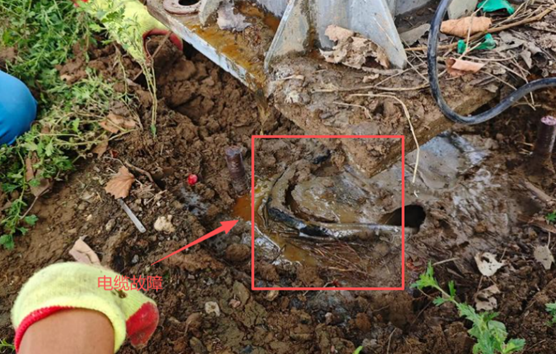
On the one hand, these hazards are highly concealed and have far-reaching consequences. High-voltage cables are often laid underground in complex operating environments; factors such as underground moisture, acid and alkali corrosion, and temperature fluctuations can easily cause the cable sheath insulation to age and deteriorate, leading to abnormal sheath current loops, accelerating insulation breakdown, and triggering ground faults and short circuits; Poor contact between cable joints and grounding boxes can result in excessive contact resistance and overheating. Prolonged operation under these conditions can burn out the joints, causing cable breaks and triggering widespread power outages. Furthermore, overt hazards—such as external impacts or accidental severing during construction—combined with covert hazards like sheath damage and excessive loop currents, further increase the risk of failures.
On the other hand, traditional O&M models are inefficient and reactive. Traditional grounding boxes can only provide basic grounding protection, lacking monitoring and early-warning capabilities, and are unable to detect various hidden hazards. Operations and maintenance rely on manual inspections, which not only face issues such as excessively long lines per inspector and numerous inspection blind spots but also result in a reactive approach to repairs only after faults occur. This not only makes emergency repairs difficult and time-consuming but also risks safety incidents such as electric shock and fire, severely impacting the stability of power supply and failing to meet the needs of modern power grids for refined and intelligent operations and maintenance.
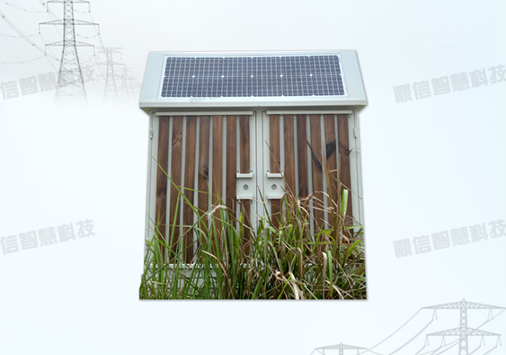
To address the aforementioned O&M challenges, Dingxin Smart Technology’s multifunctional high-voltage cable fault diagnosis grounding box, the DX-DLS100-JDX/ZH, breaks through the limitations of traditional grounding boxes’ “passive protection.” It integrates grounding protection, fault diagnosis, real-time monitoring, and intelligent early warning into a single unit, upgrading the O&M model from “passive emergency repairs” to “proactive early warning and precise response,” comprehensively addressing high-voltage cable O&M challenges, ensuring safe cable operation, and supporting various power O&M scenarios, including those of State Grid and China Southern Power Grid.
The system is equipped with a comprehensive cable monitoring terminal, whose functions fully cover all scenarios of high-voltage cable operation and maintenance, enabling comprehensive, 24-hour real-time monitoring of cable operating conditions and accurately identifying various potential hazards:
1. Multi-dimensional condition monitoring: This includes circulating current monitoring, partial discharge monitoring, cable surface temperature monitoring, distributed optical fiber temperature sensing, and joint/conductor temperature monitoring. It can detect key potential hazards in real time, such as abnormal sheath circulating currents, partial discharges, and excessive temperatures. The circulating current monitoring range is 0–500 A, and the temperature measurement range covers –55°C to +125°C, providing accurate data to support cable health assessments;
2. Comprehensive Security Protection: Integrates fiber-optic vibration detection to prevent external damage, anti-theft cutting protection for grounding wires, cabinet-opening alarms, video monitoring, and automatic fire suppression functions. These features effectively guard against risks such as external damage, equipment theft, and unauthorized operations. When the cabinet is opened without authorization, an alarm is automatically triggered, and a photo is taken, ensuring traceability of the incident;
3. Intelligent Fault Resolution: Equipped with a fault-location function, it can quickly pinpoint the source of a fault, thereby reducing repair time. It also supports out-of-limit alerts, promptly sending warning notifications when potential hazards exceed thresholds, guiding operations and maintenance personnel to take precise corrective actions and nip faults in the bud.
The device has achieved multiple breakthroughs in practicality, reliability, and convenience, highlighting its technical advantages and making it suitable for a wide range of complex operation and maintenance scenarios:
1. Diversified Power Supply: This system employs a complementary power supply model that relies primarily on solar power, supplemented by CT-induced power and 220V AC power, significantly enhancing the reliability of equipment operation and making it suitable for various power supply conditions, such as remote mountainous areas and urban power grids;
2. Broad protocol compatibility: Supports the standard MODBUS protocol as well as proprietary protocols used by the State Grid and China Southern Power Grid, enabling seamless integration into existing power operation and maintenance systems without the need for large-scale upgrades, thereby reducing the cost of deployment;
3. Stable Protection Design: The enclosure is equipped with a lightning protection device, ensuring stable operation during severe weather; additionally, the grounding components and functional modules are designed separately, providing excellent isolation between high- and low-voltage circuits and outstanding interference resistance;
4. Design for Easy Operation and Maintenance: The functional modules feature a drawer-style design, making installation and maintenance simple and convenient, which significantly reduces the workload for operations and maintenance personnel; the enclosure is made of SMC unsaturated resin, which is corrosion-resistant, highly durable, and has no recycling value, effectively reducing the risk of theft.