
In urban and rural power grid systems, overhead lines stretch out in a scattered pattern, and transformers in service areas are scattered throughout villages, towns, and rural areas. Relying on operations and maintenance personnel to conduct regular inspections on foot or by vehicle, it has always been difficult to achieve comprehensive, gap-free coverage across the entire area.
Along the lengthy power transmission corridors, various safety hazards lurk everywhere: construction site tower cranes and heavy machinery that come too close to the power lines in violation of regulations can easily scrape or tug at the conductors, causing external damage; debris such as plastic bags and kites getting caught on the conductors can quickly trigger short circuits and circuit breaker trips; birds nesting and defecating on the towers continuously contaminate the insulator bushings, creating a hidden hazard as the buildup accumulates over time; Line hardware, exposed to the elements year-round, suffers from hidden issues of aging and loosening that are difficult to detect, posing a constant threat to the stability of the power lines.
Particularly in remote mountainous areas and open wilderness regions, where roads are rugged and inspection points are scattered, manual inspections require a significant amount of time and manpower, making it difficult to conduct frequent checks. Many minor hazards go undetected until problems arise, often leading directly to power line failures and sudden power outages. This not only disrupts residents’ daily electricity use but also significantly increases emergency repair costs and slows down the efficiency of fault resolution.
As the development of new smart grids continues to advance, the shortcomings of extensive manual inspections have become increasingly apparent, and such methods are no longer sufficient to meet today’s standards for precise and routine power grid management. To proactively identify line risks, reduce fault resolution times, and minimize the frequency of power outages, establishing a 24/7, long-range, visual intelligent monitoring system for power lines has become an essential requirement for upgrading power grid operations and maintenance.
Therefore, Dinsee Smart Technology’s DX-WPS100-JP6 Power Line External Damage Prevention Monitoring and Audio-Visual Alarm with Remote Voice Announcement System (Three-Camera Integrated Power Line Monitoring Device) deeply integrates video-based visual monitoring with digital intelligent technology, establishing an integrated operations and maintenance system featuring holistic line monitoring, automatic early warning, and remote early warning. Leveraging panoramic imaging combined with audio-visual联动 monitoring, the device can rotate flexibly in all horizontal and vertical angles, ensuring truly blind-spot-free monitoring of the areas surrounding utility poles and power lines. Staff can not only access real-time footage to view on-site conditions at any time but also remotely activate voice announcements to promptly deter dangerous construction activities near power lines and unauthorized approaches to the lines, thereby preventing human-caused external damage incidents at their source.
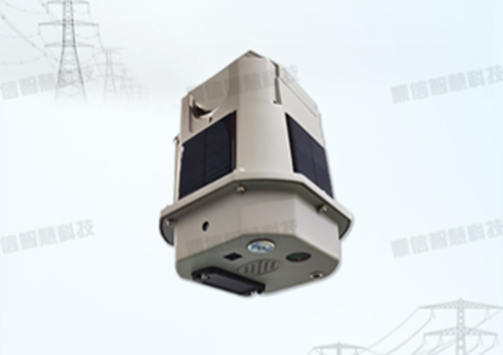
The power line external damage monitoring system, featuring audio-visual alarms and remote voice announcements, integrates multiple cutting-edge technologies such as edge computing, AI-powered intelligent recognition, high-speed 5G transmission, and data encryption and protection. Leveraging deep learning algorithms trained on vast amounts of power line imagery, it provides round-the-clock monitoring of high-risk scenarios such as construction sites, excessively tall vegetation, foreign objects entangled in power lines, and smoke from wildfires. Upon detecting an anomaly, the system immediately triggers an automatic alarm. The monitoring center can remotely control the camera to focus on the alert location and verify the situation. Operations and maintenance personnel can quickly analyze and assess the situation using the transmitted video and images, implement emergency response measures immediately, and efficiently ensure the stable operation of distribution network lines.
The equipment features ten cutting-edge specifications, making it fully suited for complex field operating environments:
1. Equipped with 4G remote video transmission, providing stable video feeds transmitted over long distances to the monitoring center;
2. The three-lens system works in coordination to capture video footage from the front, rear, and bottom, with the field of view covering the power lines and tower bases;
3. Utilizes dual-mode GPS and BeiDou positioning to accurately pinpoint the device’s location, facilitating location management;
4. Supports remote online upgrades, eliminating the need to disassemble the equipment and making future maintenance hassle-free and effortless;
5. Equipped with two-way voice intercom and long-range public address capabilities, making it more efficient to deter violations on-site;
6. AI intelligently detects potential hazards such as cranes, floating debris, wildfire smoke, and unauthorized entry, automatically sends alerts, and triggers audible and visual warnings;
7. Add a temperature and humidity sensor module to simultaneously collect environmental data from the area surrounding the circuit;
8. A dual-power supply solution combining CT power generation with solar energy ensures stable and reliable power supply for long-term use in the field;
9. Features a built-in 3000mAh lithium iron phosphate battery that provides up to 48 hours of standby time after a power outage, ensuring uninterrupted emergency monitoring;
10. The snap-fit quick-installation design allows for installation while the power is on, making installation convenient and ensuring that normal power supply is not interrupted.