
Failures in power transmission lines rarely occur without warning.
Thunderstorms in spring and summer, icing in fall and winter, cranes used in road construction, and fishing rods cast from riverbanks all place stress on power lines at different times. The data shows that circuit breaker trips are not evenly distributed; they tend to occur in clusters during specific time periods and along certain sections of the lines. However, it is worth noting that most faults go through a fairly long latent period before they actually occur.
Failures rarely occur “suddenly.”
Lightning strikes can damage insulators, but they do not explode upon the first strike. After the insulator’s surface is struck by lightning multiple times, microscopic cracks form in the glaze, causing weak discharges along the surface in humid weather. These discharges are invisible to the naked eye, but they gradually erode the insulator’s remaining service life. Similarly, when conductors are repeatedly bent by wind vibrations, the failure of a single aluminum strand causes the load to shift to adjacent strands, and it may take some time before the entire strand breaks. The period from the initial damage to complete failure can be quite long.
Traditional inspections leave large gaps between inspection cycles. An inspection conducted after climbing the tower may conclude that “no abnormalities were found,” but a month later, significant deterioration may have already occurred at that location. The crux of the problem is this: the progression of defects is continuous, while human inspections are intermittent. Between the time a potential hazard “exists” and the time it “triggers a trip,” there is actually a slow process of signal release—but these signals are too faint and subtle to be detected by conventional methods.
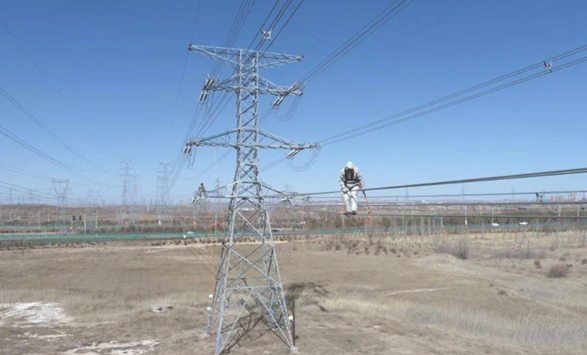
Detecting "Footsteps" on the Cable
At the moment a fault occurs, a traveling wave signal is generated at the fault point and propagates rapidly toward both ends of the line; essentially, this is an extremely brief sudden change in voltage and current. This signal travels along the conductor at a speed close to the speed of light (approximately 2.9 × 10⁸ meters per second in overhead lines). If a high-speed sampling device is installed at each end of the line to record the arrival times of the traveling wave, the distance of the fault point from one end can be calculated based on the time difference between the arrival times recorded at both ends.
Positioning accuracy depends on the resolution of time measurements. When time measurements are accurate to the microsecond level, distance measurement errors can be kept within a few hundred meters. This level of accuracy is practical for field inspections—for a line hundreds of kilometers long, narrowing the search area from “the entire line” to “a section of a few hundred meters near a particular village” can significantly reduce the workload of manual inspections.
An earlier warning came from a "small pulse"
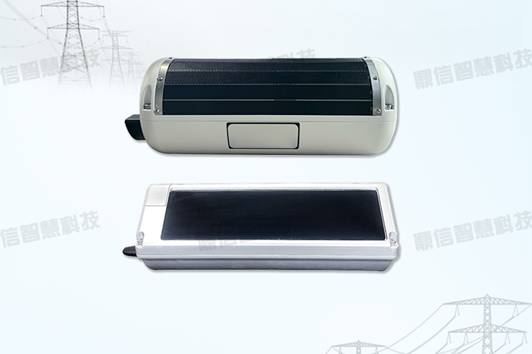
Dingxin Smart Technology’s Contact-Type Distributed Fault Monitoring Device DX-WPS100-GZ01 not only captures traveling wave signals when faults occur but also continuously records various types of abnormal discharge pulses that appear on the line. When weak discharge signals repeatedly occur at the same location over several days or weeks, and their amplitudes show a gradual upward trend, the system generates a trend chart based on three dimensions—amplitude, location, and time—and issues a pre-alert to operations and maintenance personnel.
The engineering significance of this feature lies in the fact that it does not wait for a fault to occur before indicating its location; rather, it alerts you that “conditions at a certain location are deteriorating” before a fault has even developed. For example, an insulator that has been struck by lightning multiple times may begin to exhibit minute surface discharges, or a section of conductor may show the initial signs of strand breakage due to wind-induced vibration. These early warning signs cannot be detected with the naked eye from the ground, but they can be recorded through high-frequency traveling-wave monitoring.
Shorten the power outage window
After a trip occurs, the device automatically uploads the time, location, and waveform data to the backend via a wireless network. Operations and maintenance personnel can access fault location results via text message or a web client. Compared to inspecting each tower along the line one by one, inspections guided by location data allow personnel to proceed directly to the target section. This increase in efficiency is particularly noticeable in complex terrain such as mountainous areas or river crossings—concentrating the search within a few hundred meters of the fault point saves far more time than inspecting the entire line, while also avoiding the physical strain and operational risks associated with repeated tower climbs.
The device itself uses a contact-based installation method, hanging directly on the conductor. It draws power from the line’s load current via a current transformer, requiring no external power source or solar panels, making it suitable for long-term outdoor deployment. During installation, the line remains energized, so power supply reliability is not affected. It provides a set of quantifiable physical data—time, amplitude, and location—to help operations and maintenance personnel assess the line’s health status and identify points requiring intervention.