
Distribution lines cover a wide area and follow dispersed routes; many are laid along the edges of villages, towns, forests, and farmlands, resulting in frequent interactions with the surrounding environment. Compared to high-voltage transmission lines, distribution lines are more likely to be affected by external factors such as tree growth, construction activities, vehicle traffic, and contact with animals, leading to a correspondingly higher failure rate.
1. Major Types of Faults in Power Distribution Lines
Tree obstructions are the most common type of hazard on power distribution lines. Trees and shrubs surrounding the lines continue to grow; during humid weather, branches that come close to or touch exposed conductors may form a leakage path, causing a single-phase ground fault or a phase-to-phase short circuit. Long-term friction can also wear down the conductor insulation, exposing the conductor and further reducing the line’s insulation level to ground. During the summer thunderstorm season, when distribution insulators are struck by direct or induced lightning, surface flashovers may occur, causing the line to trip momentarily. In forested areas, the dense smoke and high temperatures generated by wildfires during hot, dry seasons can reduce the insulating properties of the air; if flames come into direct contact with the line, they may cause the conductors to burn through. In addition, vehicle scrapes on rural roads and accidental contact with machinery during farm work are also common causes of external damage to distribution lines.
Single-phase ground faults on power distribution lines are among the most challenging types to handle during operation. In situations such as a conductor falling to the ground, a tree branch coming into contact with a conductor, or insulator breakdown, a path is formed between the fault point and ground; however, the short-circuit current is relatively small, so conventional protective devices may fail to operate or may operate with a delay. If the ground fault persists, it not only increases line losses but may also pose a risk of electric shock to personnel, and it is difficult to quickly locate the fault point during troubleshooting.
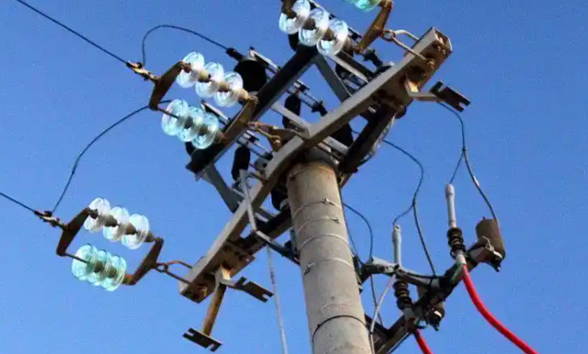
2. Application of Traveling-Wave Location in Power Distribution Lines
The difficulty in locating faults on distribution lines stems primarily from the line structure. Distribution lines contain a large number of T-junctions and customer boundary points; a single main line may branch off into multiple sub-lines, and any branch at any level could be the location of a fault. Traditional methods rely on manual, section-by-section inspection along the line, which is time-consuming in mountainous or forested areas. Dingxin Smart Technology’s overhead Distribution Network Fault Traveling Wave Precision Location Device DX-WPS100-GZ03 achieves distance measurement by detecting the traveling wave signals generated by the fault.
When a discharge, insulation breakdown, or ground fault occurs at a point along a line, the fault point radiates a high-frequency traveling-wave signal—a sudden change in voltage and current that propagates along the conductor at a speed approaching the speed of light—toward both ends of the line. This signal propagates along the conductor in both directions; the device records the time the signal arrives at the unit and calculates the time difference based on the time recorded by the device at the opposite end. Given the known line length and the speed of the traveling wave, the distance between the fault location and the device can be determined.
When deployed on 10 kV overhead lines in distribution networks, this device uses a high-precision Beidou-synchronized clock for time synchronization, achieving nanosecond-level time accuracy and limiting distance measurement errors to within 100 meters. For T-connected lines, once the device is installed on both the main line and the branch line, the system can determine whether a fault is located on the main line or the branch line, as well as whether it is on the customer side or the utility side, thereby narrowing the scope of on-site troubleshooting.
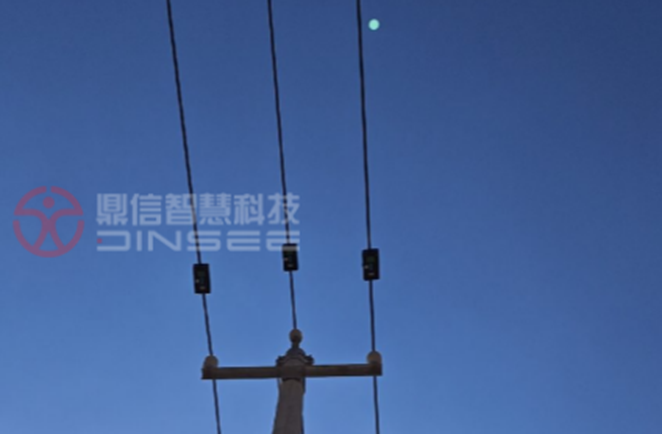
3. Integration of Early Warning and Condition-Based Maintenance
In addition to locating faults that have already occurred, the traveling-wave precise fault location device for overhead distribution networks continuously monitors abnormal discharge signals that arise during line operation. When a single-phase high-resistance ground fault or insulation degradation occurs at a specific location, the resulting discharge pulses are recorded by the device. By analyzing transient zero-sequence characteristics and traveling-wave sequences, the system can identify abnormal conditions and generate early warning alerts, enabling operations and maintenance personnel to receive notifications before a fault develops into a permanent fault.
In terms of operational mechanisms, the overhead distribution network fault traveling wave precise location device operates 24/7 in real time. After a fault occurs, the location results—including the fault point’s location, time, and corresponding waveform data—are pushed to operations and maintenance personnel via text message and a web client. From the location results to on-site verification, follow-up actions are carried out by patrol personnel. This device shifts the approach to handling distribution line faults from full-line patrols to targeted troubleshooting based on location information, helping to reduce outage duration and minimize the need for pole-climbing inspections.